

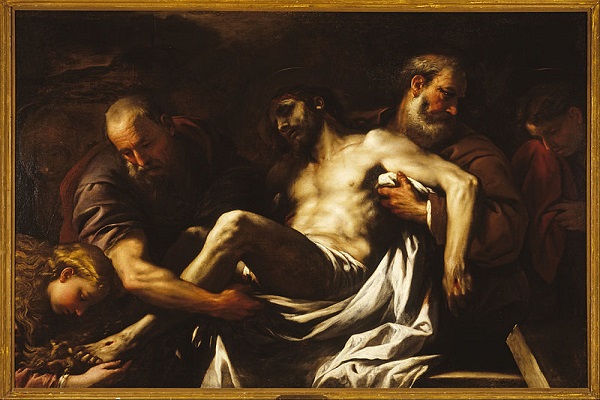
The Crucifixion of the Lord…the removal and circulation of the Epitaph
The Christ, after his capture on the Mount of Olives, tried and condemned by the High Priests. The trial was of course formal since the verdict had been decided before he was even arrested. The High Priests wanted His death.
But because they did not have the legal authority, the judgment of condemnation had to be pronounced by the Roman procurator. During those years, the governor in Jerusalem was Pilate. Jesus crawled into it, while the crowd, at the urging of the High Priests, shouting, He was asking for His Crucifixion.
There was the custom, on the day of the Jewish Passover, the Romans to release a condemned Jew. Pilate wanting not to have the responsibility of the crucifixion of Christ, he asked the crowd to choose between the God-man and Barabbas, mutineer and murder, who would be the one to be released.
The crowd, by shouting, chose to release Varavas. Immediately after, and now by order of Pilate, Christ is led into the inner courtyard of the Praetorium (that is, of the headquarters of the Romans). There his soldiers wear a purple and a crown of thorns. Mockingly calling him "King of the Jews", they beat him and spit on him. The time of the Crucifixion is near.
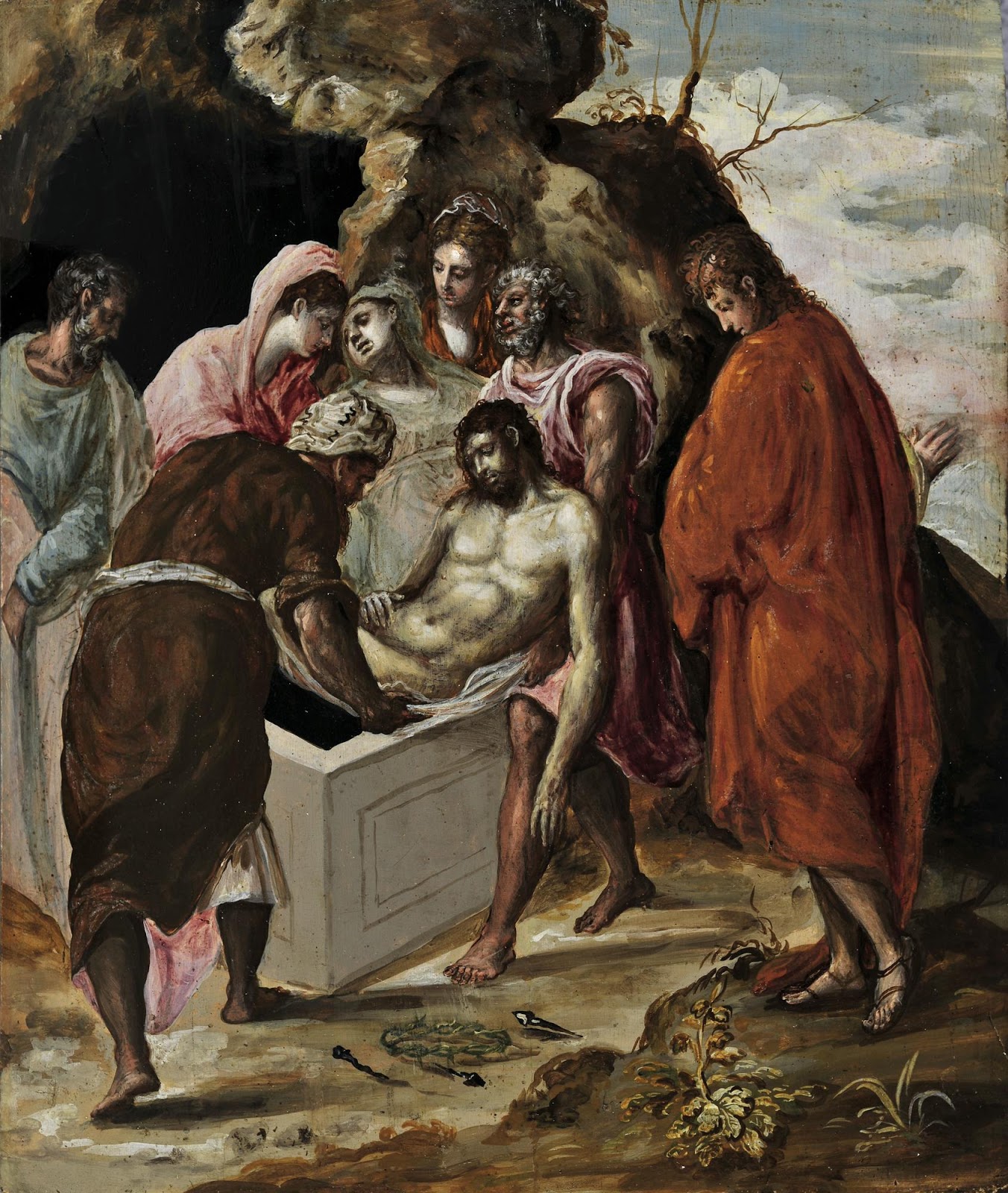
Loaded Jesus with the Cross on which he will be crucified, is led to the hill of Golgotha. On the way he cannot bear the weight of the Cross and falls. The Romans impose on Simon of Cyrene, which passed through that point, to carry the Cross of Martyrdom. Finally at 9 time in the morning, Jesus is crucified. The martyrdom of Christ lasted six hours. At 3 the hour in the afternoon delivered up His spirit,having previously forgiven those responsible for His death.
But because funerals were forbidden on Saturday, Joseph of Arimathea, hidden disciple of Christ, asked Pilate to take His body and bury it. This permission was given to him by wrapping the body of Christ in a sheet, he buried him in a rock-hewn tomb. The opening of the monument,closed with a large stone. The ceremony of Demobilization, it is done in our churches, at noon on Good Friday. While in the evening of the same day, the procession of the Epitaph is held. Church bells ring mournfully throughout the day.
The fast of the day is very strict and forbids even oil. Many believers are used to drinking some vinegar on Good Friday, in memory of what they gave to Jesus, when He asked for water in the last moments of His earthly life. Custom forbids any work on this day.
In many areas they make a statue of Judas, and after circumambulation of the Epitaph they deliver it to the fire. The epitaph flowers, shared among the faithful, who keep them together with the images in their homes. End, on this day it is customary for believers to visit the graves of dead relatives and friends.